
Cycling to work: benefits and practical advice
The term "vélotaf", a contraction of "vélo" and "taf" (work), refers to the use of a bicycle for commuting to work or for business trips.
Adopting cycling to work is first and foremost choosing a practical, economical, and environmentally friendly mode of transport. Integrating cycling into your daily routine allows you to improve your health, reduce your transportation costs, and limit your carbon footprint, among other things.
Discover how this simple practice can transform your commute while benefiting from technological innovations and French expertise in urban mobility! Details to follow.
Why cycle to work?
Cycling to work offers numerous advantages that can transform your daily life, such as:
- Maintaining good physical fitness through regular cycling strengthens the cardiovascular system and reduces the risk of chronic diseases. Incorporating cycling into your routine is therefore an excellent way to engage in moderate and regular physical activity.
-
Saving money : Electric and non-electric bikes are cheaper than cars and gasoline. Unlike cars or public transportation, they don't require fuel, tickets, or parking fees. Maintenance costs are also significantly lower than those of a car or motorcycle.
-
Reducing carbon footprint : Using electric bikes for your home-to-work journeys contributes to reducing CO2 emissions.
-
Time saving : In congested urban areas, cycling can often be much faster than driving or taking public transport. This allows you to avoid traffic jams and delays, and enjoy a smooth and predictable journey.
- Stress reduction : Instead of taking the car, spending a fortune on fuel, and paying for parking, cycling simplifies your daily routine. Furthermore, commuting by bike allows you to start and end your day more peacefully. Cycling reduces accumulated stress and improves your mood, while offering a sense of freedom and control over your journey, which is beneficial for your mental well-being.
Protecting yourself from the problems of commuting by bike
Cycling isn't always a dream. You might be caught in an unexpected downpour, have to sprint like Lance Armstrong to make it to your morning meeting on time, or worry about ruining your clothes along the way. However, all these inconveniences can be avoided without resorting to the car.
Let's start with a cyclist's worst enemy: rain. When you're dressed for work, getting soaked is far from pleasant. Fortunately, there's clothing specifically designed to protect you, including stylish rain pants that look just like regular everyday trousers. These accessories will keep you dry while preventing stains caused by an unfortunate contact with your bike's greasy chain. For more information, we recommend our article on cycling rain pants.
Still on the topic of cleanliness, there are still those bicycle chain grease stains. To avoid soiling your clothes with black grease when putting a chain back on, we recommend opting for a belt drive. This component has the advantage of being quiet, clean, and maintenance-free. To learn more, feel free to consult our guide on belt drives for electric bikes.
If you're worried about arriving at a meeting sweaty after a strenuous ride, an electric bike is the perfect solution. We recommend a hybrid bike to ensure you never run out of electric assistance. This type of bike recovers kinetic energy when braking, preventing you from being caught off guard by a dead battery.
Choosing the right bike for commuting

To find the best bike for commuting , it's highly recommended to understand the available options and compare their features, advantages, and disadvantages. Here's a comparison of different types of bikes suitable for commuting (including electric bikes and, in particular, the Anod hybrid bike ):
|
Type of bicycle |
Features |
Benefits |
Disadvantages |
|
City bike |
Lightweight, simple, often without suspension |
Easy to maneuver, inexpensive, requires little maintenance |
Less comfortable on long distances or uneven roads |
|
Road bike |
Designed for speed, thin tires, lightweight |
Fast and efficient on cobblestone roads |
Less suitable for urban journeys with obstacles |
|
Mountain bike (MTB) |
Robust, wide tires, suspension |
Versatile, suitable for different types of terrain |
Heavier, less efficient on cobblestone roads |
|
Classic hybrid bike |
Combination of on-road and off-road features |
Versatile, comfortable, a good compromise |
May be more expensive than other options |
|
Electric bike |
Electric motor, battery, pedal assist |
Makes long journeys easier, allows you to carry loads |
Heavier, requires regular recharging |
|
Anod Hybrid |
Electric assistance even without a battery, ultra-compact USB-C battery |
French innovation, flexibility, easy charging everywhere |
Higher initial cost, requires battery maintenance |
For cycling to work to be the ideal option, it is important to choose the bike best suited to your daily needs.
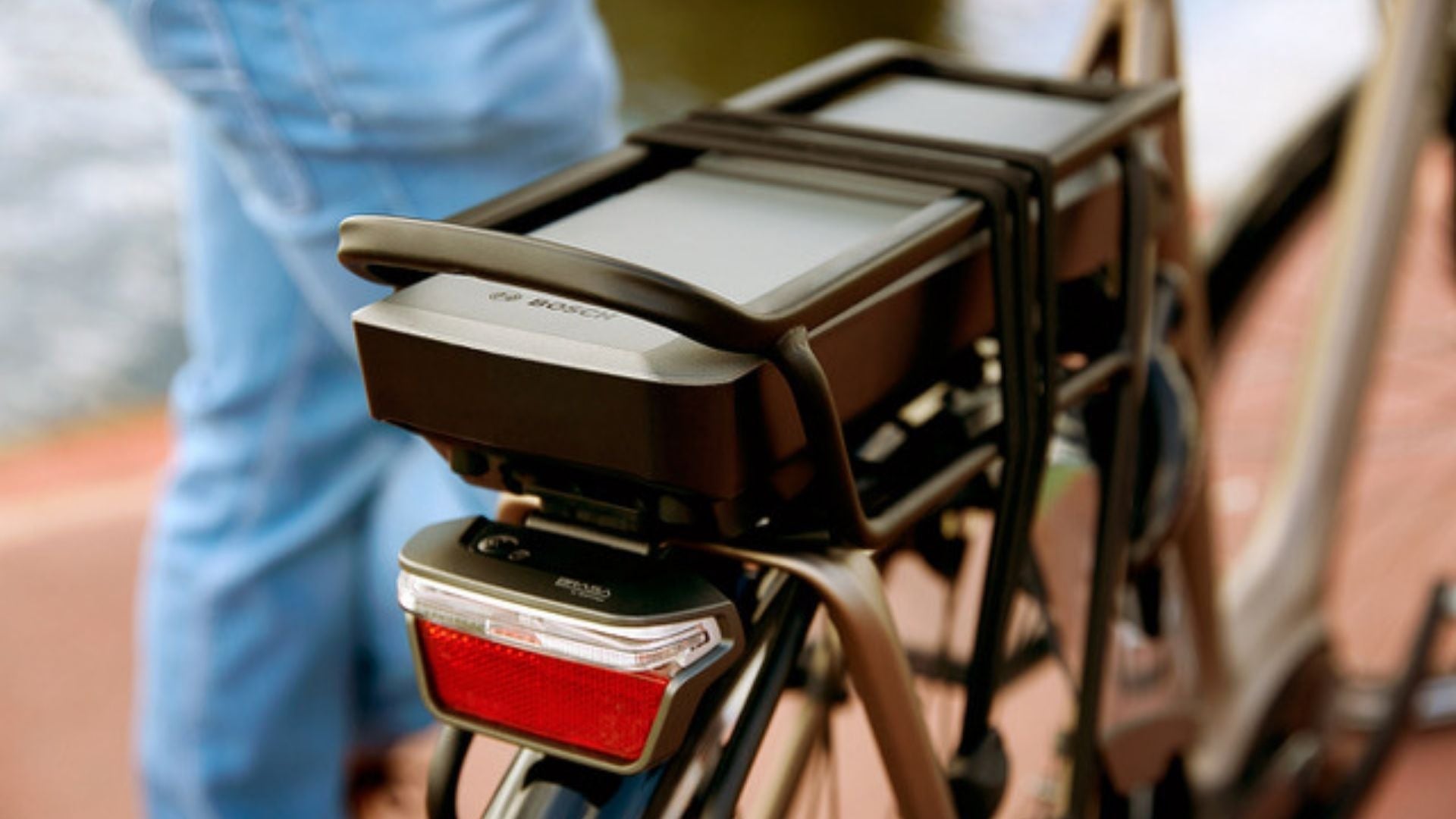
Opt for a lightweight and easily portable battery. Nothing is worse than constantly carrying a bag with a 2-4kg brick-sized battery on your back. Brands like Anod offer ultra-compact batteries that fit in a pocket.
Also, be sure to choose a bike with a range suitable for your journeys; 25 km is more than enough for commuting. You can either invest in a super-powerful battery or opt for a hybrid bike that recharges while riding. The advantage of the latter is that it continues to provide electric assistance, ensuring a smooth ride even when the battery is low, thanks to energy recovery.
For more information, see our article dedicated to hybrid bikes.
Bonuses and subsidies for cycling to work
Cycling to work can be even more advantageous thanks to the various grants and financial aid available. These are specifically designed to encourage cycling for commuting, reducing the initial purchase cost while offering tax benefits .
Who pays the cycling bonus? Bonuses to encourage cycling to work can be funded by various organizations:
- The government : Conversion bonuses and electric bike bonuses are financed by the State;
- Local authorities : Regions, departments or municipalities can offer specific assistance;
- Employers : Bicycle mileage allowance and certain bonuses can be paid directly by companies.
Regarding the main subsidies for commuting by bicycle, you will find in particular:
- The conversion bonus : This is financial aid for the purchase of an electric bicycle in exchange for the scrapping of an old polluting vehicle, which can reach up to €1,500;
- The electric bike bonus : This is a subsidy specifically intended to cover all or part of the purchase of an electric bike, up to €200. The bonus is subject to income and place of residence criteria;
- Local government assistance : Some regions, departments, or municipalities offer subsidies for the purchase of bicycles. These subsidies can often be combined with other national subsidies;
- Bicycle Mileage Allowance (IKV) : This allowance is paid by the employer for home-to-work journeys made by bicycle (up to €0.25/km). Therefore, everything depends on the agreement negotiated with the company and the specific journeys undertaken.
Calculate your subsidies now and find out how much you can save by commuting by bike.
Anod, the most suitable bike for commuting.
Among the many electric bikes available on the market, some are better suited than others for commuting, and the Anod Hybrid is an excellent example. Designed specifically for commuting, this city bike combines comfort and innovation. Its ergonomic frame is designed to prevent back pain after long rides. But what truly sets the Anod Hybrid apart from other electric bikes is its unique hybrid technology.
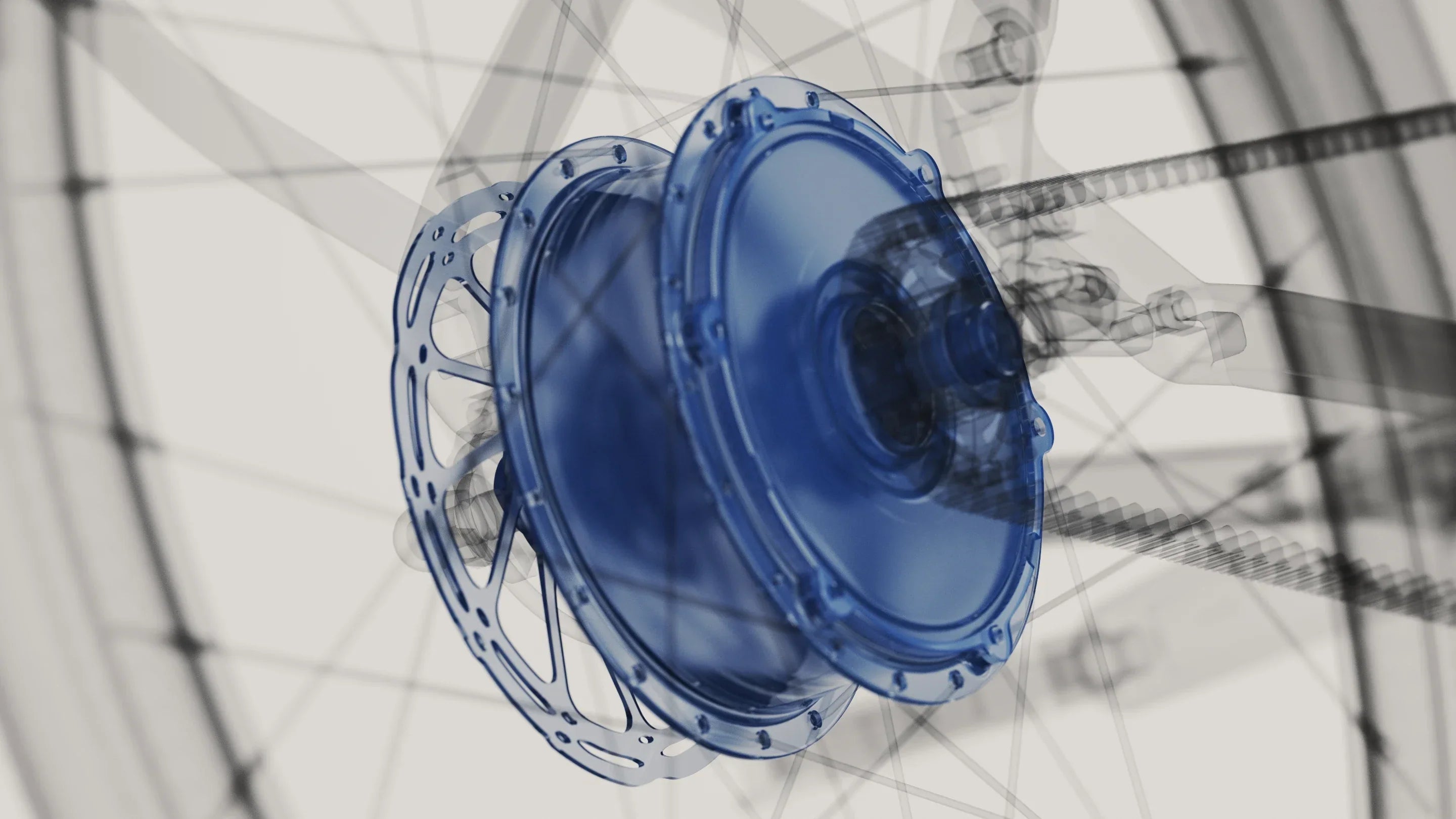
Thanks to its energy-recovery motor, the bike recharges itself during braking. However, to preserve battery life, the recovered energy is not stored directly in the battery. Instead, it is stored in supercapacitors, which can release energy much faster than a conventional battery. Unlike traditional batteries made of lithium and other metals with a negative environmental impact, the supercapacitors used by Anod are 100% recyclable and made from coal.
And what about the battery? The Anod battery ensures continuous range without relying solely on the energy recovery system. This complementary feature allows the bike to provide electric assistance even when the battery is depleted.
The combination of these technologies also solves the problem of battery weight. While conventional lithium batteries weigh between 2 and 4 kg, the Anod battery weighs only 650 g, thanks to its design using six times less lithium than other batteries on the market.
How to obtain the bicycle mobility bonus?

Step 1: Check your eligibility
Before you begin, it is essential to check that you are eligible for the bicycle mobility grant. Eligibility criteria may include:
- the characteristics of the bicycle;
- resource conditions;
- the place of residence.
Step 2: Gather the necessary documents
To obtain the bicycle mobility bonus, you will need to provide several documents:
- Proof of purchase : Invoice or receipt for the bicycle;
- Proof of residence : To prove that you reside in an eligible area;
- Proof of scrapping : If you are applying for a scrappage bonus
- Bank account details (RIB) : For payment of the bonus.
Step 3: Submit the application
The procedure for submitting your application may vary depending on the bonus you are applying for. Here are the main steps for each type of bonus:
|
Prime |
Process |
Required documents |
Deadline |
|
Conversion bonus |
Complete an online form on the website of the Agency for Services and Payments (ASP) |
Proof of vehicle scrapping, bicycle purchase invoice, proof of address |
Wait for validation and payment of the bonus, which can take several weeks. |
|
Electric bike bonus |
Apply on the official government website (service-public.fr) |
Bicycle invoice, proof of address, bank statement, sworn statement |
The request can be processed in a few weeks. |
|
Aid from local authorities |
Contact your local council or regional council to find out about the specific procedures. |
These vary depending on the local authority, but generally include the bill and proof of residence. |
Variable depending on local procedures |
|
Bicycle Mileage Allowance (IKV) |
Make a request to your employer |
Proof of journeys made, possibly a sworn statement |
Depends on company policy |
Step 4: Monitor the evolution of demand
After submitting your application, you simply need to regularly check the status of your application on the website of the organization concerned.
If necessary, contact the organization for further information or to clarify details!
Step 5: Receive the bonus
Finally, once your application is approved, the bonus will be paid directly into your bank account. Remember to double-check that the information you provided (such as your bank details) is correct to avoid any delays!
In conclusion, electric bike commuting meets many needs, such as saving time and getting regular exercise. Furthermore, it offers financial advantages in addition to being environmentally friendly. Therefore, commuting by bike is a simple way to enjoy yourself if you have a good bike.